Nigeria is intensifying efforts to reduce its dependence on imported military equipment through plans to manufacture armoured vehicles, anti-drone systems and other specialised defence platforms locally.
The initiative is being pursued by the Defence Industries Corporation of Nigeria, DICON-D7G, in partnership with Eagles International for Defence Systems. The partnership is expected to facilitate technology transfer, strengthen indigenous manufacturing capacity and create employment while improving Nigeria’s ability to respond to evolving security threats.
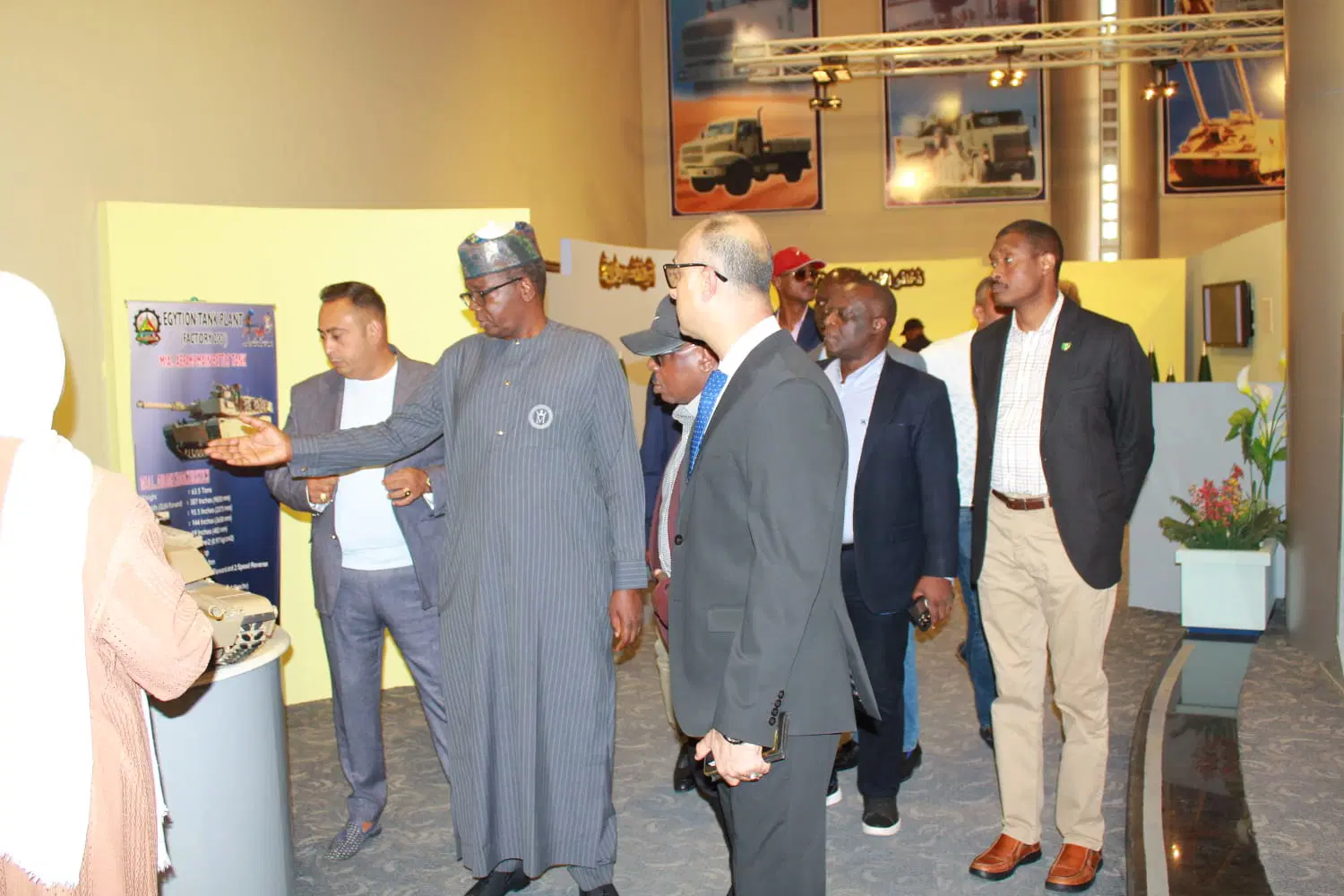
The development was disclosed by DICON-D7G Chief Executive Officer, Osman Chennar, following a two-day inspection of defence factories and military production facilities in Cairo. The inspection was led by the Minister of State for Defence, Dr Bello Mohammed Matawalle, alongside other Nigerian officials.
Chennar said the partnership would facilitate the transfer of advanced defence technologies to Nigeria and establish production lines capable of manufacturing several military platforms locally. He added that the long-term objective included developing sufficient capacity for Nigeria to eventually export defence equipment to other African countries.
The initial phase of the project, according to him, is expected to create employment for more than 200 workers. It would also provide opportunities for about 100 retired military personnel, whose operational and technical experience could be deployed within the emerging defence-industrial ecosystem.
The planned production portfolio includes the Armoured Multi-Purpose Vehicle BR6, a modular platform designed for multiple defence missions.
Other targeted products include Armoured Personnel Carrier cabins, 120mm manual mortar launcher cabins, as well as specialised medical evacuation and ambulance cabins. The proposed programme also covers the MRAP Buffalo U.10 and M.12, MRAP-Buffalo F-4 and the Rhino Guard GXR anti-drone and RPG-protected vehicle.
Other platforms listed include the APC Moon PT6, GXR Phantom light vehicle and BMP-2 Infantry Fighting Vehicle. The initiative comes as Nigeria continues to confront terrorism, banditry, kidnapping and other asymmetric security threats that have placed sustained pressure on the Armed Forces.
The move toward local production is already beginning to take shape, with the Nigerian Army receiving locally manufactured armoured vehicles.
The development signals a gradual attempt to move from heavy dependence on foreign procurement towards a domestic defence production chain. Such a shift could allow Nigeria to develop greater control over the manufacture, maintenance and modification of equipment required for its security operations.
Beyond manufacturing military platforms, DICON-D7G is also planning a dedicated military jetty in Lagos.
Chennar said the facility would provide a strategic logistics and distribution hub for transporting raw materials, components and finished defence equipment within Nigeria and potentially to other African markets. The proposed jetty is expected to create employment for more than 200 retired military personnel and over 1,000 civilians once operational.
The expansion of local defence manufacturing could also have implications beyond military preparedness.
The initiative is expected to reduce Nigeria’s exposure to foreign supply disruptions, retain more defence expenditure within the domestic economy and develop specialised technical expertise. It could also help build industrial capacity for maintaining military equipment during prolonged security operations.
The DICON-D7G partnership with Eagles International is therefore being positioned as more than an equipment procurement arrangement. It represents an attempt to establish a sustainable Nigerian defence-industrial ecosystem capable of designing, assembling, manufacturing and maintaining critical military platforms, while creating the capacity to compete for a growing share of Africa’s defence market.