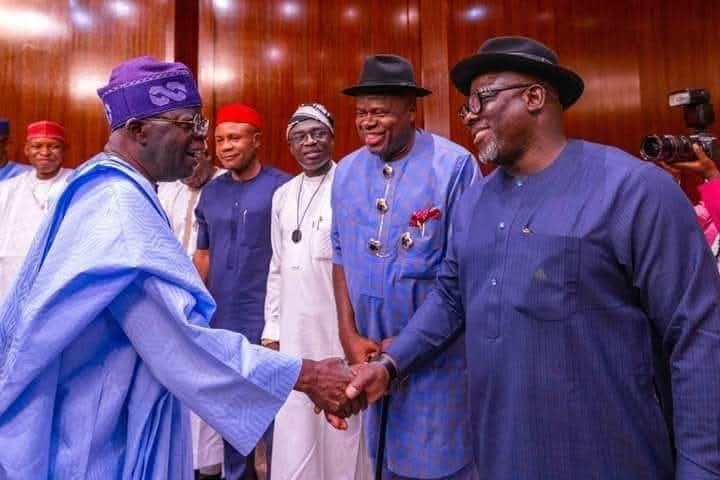
The debate over voting against Tinubu ahead of the 2027 general election gained fresh attention after Delta State Governor Sheriff Oborevwori urged residents to support President Bola Tinubu, arguing that rejecting the President at the polls would be inappropriate given his relationship with the state through First Lady Oluremi Tinubu. The governor made the remarks during a political gathering attended by party stakeholders and supporters.
Governor Oborevwori used the occasion to encourage political leaders and residents of Delta State to remain supportive of President Tinubu and his administration. According to the governor, the President shares a unique bond with Delta State through the First Lady, Senator Oluremi Tinubu, whose family roots are connected to the state. He argued that this relationship should be considered when political decisions are made in future elections.
Speaking before party faithful, Oborevwori stressed the importance of maintaining a productive relationship with the Federal Government and supporting leadership that can contribute to development efforts in the state. His remarks placed the issue of voting against Tinubu at the centre of ongoing political discussions ahead of the next election cycle.
The Delta governor emphasized that cooperation between state governments and the Federal Government remains important for development and policy implementation. He noted that states often benefit from strong partnerships with federal authorities through infrastructure projects, economic programmes, and other development initiatives. Maintaining such relationships, he said, should remain a priority for political leaders.
Political observers say governors frequently advocate closer collaboration with the centre to attract investments and public projects that can benefit their states. The governor’s position suggests that voting against Tinubu would undermine a relationship he believes has been beneficial to Delta State.
Although the 2027 general election is still some time away, political conversations have intensified across the country as parties and influential figures begin positioning themselves for future contests. Consultations, endorsements, strategic alliances, and public declarations have become increasingly common as political stakeholders assess potential electoral dynamics.
Analysts note that comments from serving governors often carry significant weight because they can influence political alignments within their states and beyond. As a result, the governor’s statement on voting against Tinubu has attracted attention from political observers nationwide.
The comments have generated debate among party supporters, political analysts, and members of the public. Some stakeholders view the governor’s remarks as an early endorsement of President Tinubu’s potential re-election bid, while others interpret them as a broader call for political cooperation between Delta State and the Federal Government.
Political analysts note that endorsements and public declarations are common features of Nigeria’s evolving political landscape, particularly as election cycles approach. The discussion surrounding voting against Tinubu is expected to continue as more political actors outline their positions ahead of future campaigns.
Delta State remains one of the country’s most politically influential states due to its large voting population and strategic economic significance. Political developments within the state often attract national attention because of their potential impact on broader electoral calculations in the South-South region and beyond.
Observers say statements from prominent political figures in Delta can influence discussions about alliances, voting patterns, and regional political strategies. For this reason, comments concerning voting against Tinubu have generated interest well beyond the state’s borders.
While official campaigns have not commenced, political leaders are increasingly shaping narratives that could influence future electoral outcomes. Public endorsements, political consultations, and statements from influential officeholders often serve as indicators of emerging alliances and strategic priorities.
The governor’s remarks contribute to a growing body of political discourse surrounding President Tinubu’s prospects ahead of the next presidential election. As preparations gradually take shape, the issue of voting against Tinubu is likely to remain part of broader national political conversations.