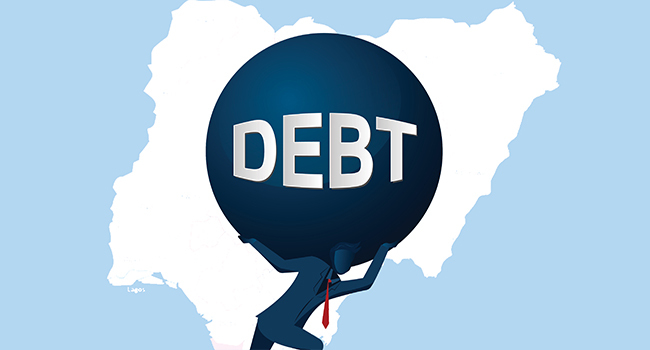
Nigeria’s debt burden is expected to reach N155trn after the Senate approved a fresh $6bn loan request from President Bola Ahmed Tinubu, a move that will raise the country’s total public debt stock and intensify fiscal pressures.
The approval came swiftly in plenary and will add an estimated N8.4trn to the nation’s liabilities.
Nigeria has been navigating a challenging fiscal landscape marked by persistent budget deficits, revenue shortfalls, and reliance on both domestic and external borrowing to finance government operations and development projects.
As of December 31, 2025, total public debt stood at approximately $110.3bn, equivalent to about N159.2trn, including external and domestic obligations.
Against this backdrop, the Nigeria debt burden reaches N155trn reflects the cumulative effect of recent borrowings and the decision by the National Assembly to greenlight additional external financing.
Debt service obligations already account for a significant portion of government revenue, prompting economists and policymakers to debate long-term sustainability and fiscal risk.
On March 31, 2026, the Senate approved President Tinubu’s request to borrow $6bn in external funding following an expedited legislative process that began and concluded within a single day.
The Senate President, Godswill Akpabio, read the letters from the President seeking approval, which were then considered and passed after a report by the Senate Committee on Local and Foreign Debts led by Senator Aliyu Wammakko.
The $6bn package comprises two major components: a structured Total Return Swap (TRS) financing programme of up to $5bn with First Abu Dhabi Bank, and a $1bn United Kingdom export finance facility arranged by Citibank (London) to support infrastructure, including rehabilitation of the Lagos Port Complex and Tin Can Island Port.
According to President Tinubu’s letters to the Senate, the proceeds from the TRS facility are intended to support budget implementation, finance critical infrastructure projects, refinance expensive domestic and external debts, and provide liquidity for urgent fiscal obligations.
The structured TRS programme will be drawn in tranches, and Federal Government of Nigeria securities denominated in naira will serve as collateral, with margin obligations payable in US dollars.
The arrangement period is set at six years with provisions for rollovers and break clauses.
Economists and debt experts have warned that adding $6bn will increase Nigeria’s debt-service-to-revenue ratio, which was already estimated at about 60 per cent by the end of 2025, underscoring risks tied to currency volatility and revenue generation.
The Nigeria debt burden reaches N155trn milestone underscores significant fiscal implications for the economy.
With a large share of government revenue consumed by debt service, less funding is available for essential public services such as education, healthcare, and infrastructure.
Foreign exchange risk poses another concern, as servicing external loans can become costlier when the naira depreciates against major currencies, increasing repayment obligations in dollar terms.
Analysts have cautioned that fluctuating exchange rates may exacerbate debt servicing pressures and strain public finances further.
For policymakers, the approval of the $6bn loan raises questions about balancing the need for development financing with long-term debt sustainability.
A higher debt stock may also affect Nigeria’s creditworthiness and borrowing costs in global financial markets.
In addition, the inclusion of infrastructure financing, particularly for port rehabilitation, demonstrates the government’s efforts to address structural constraints in logistic and trade sectors, which could boost economic activity if executed effectively.