
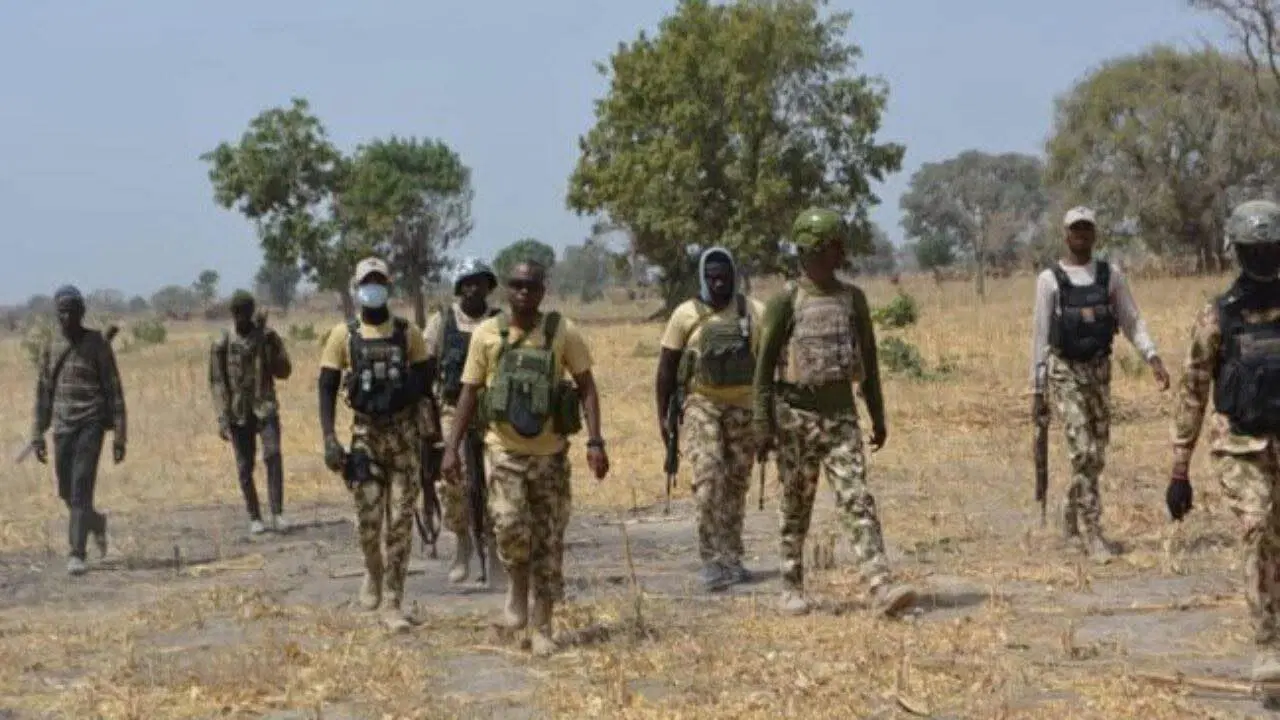
Bauchi forest Operation has intensified following a coordinated military offensive that led to the overrunning of terrorist camps in forested parts of Bauchi State. Troops also destroyed logistics structures used to support insurgent activities in the area. The operation was conducted in identified forest corridors long associated with criminal concealment and movement.
Military authorities confirmed that the mission disrupted operational networks sustaining armed groups.
Bauchi forest Operation is part of sustained military clearance campaigns across forest belts in northern Nigeria, where difficult terrain has historically provided cover for armed groups. These forest zones often serve as transit and storage corridors for weapons, supplies, and communication equipment used by insurgents.
Bauchi State has experienced repeated security operations targeting such enclaves, especially in remote communities with limited road access. These areas are strategically important due to their proximity to inter-state routes that connect northern and central Nigeria.
Military strategy in recent years has shifted toward intelligence-led forest clearance missions. This approach focuses on identifying concealed camps, disrupting supply chains, and preventing regrouping of armed elements. Bauchi forest Operation reflects this tactical shift toward sustained pressure on insurgent infrastructure rather than isolated engagements.
Bauchi forest Operation involved troops of the 33 Artillery Brigade working in coordination with the Office of the National Security Adviser. The operation targeted the Dajin Madam forest axis, a known difficult terrain used for concealment activities.
Military sources confirmed that troops advanced into identified positions following intelligence inputs. On arrival, several camps believed to be used by armed groups were overrun during the clearance mission. The troops proceeded to dismantle the structures found within these locations.
Logistics materials discovered in the camps were destroyed to prevent reuse. These materials were reportedly part of supply systems supporting movement and sustenance of armed groups operating within the forest.
The operation was carried out through coordinated movement across multiple points, allowing troops to gain control of the area. Insurgents reportedly abandoned positions as pressure increased during the advance.
Bauchi forest Operation also included sweeping actions to ensure that no regrouping occurred immediately after the clearance phase. Troops maintained presence within the area during the operation window to consolidate control.
Bauchi forest Operation carries direct implications for security stability across Bauchi State and surrounding regions. The destruction of camps reduces the operational depth available to armed groups and limits their ability to stage coordinated activities.
For communities located near forest corridors, such operations are significant for restoring access to farmlands and improving movement across rural roads. Security pressure in forest zones also reduces risks along adjoining transport routes used for trade and travel.
For security planners, the operation reinforces the importance of sustained forest-based surveillance rather than short-term interventions. It also highlights the role of intelligence coordination between military formations and national security structures.
For regional economies, improved security conditions in rural and forest-adjacent areas can support agricultural activity, local trade, and mobility of goods. Stability in these zones is critical for linking rural production areas with urban markets.