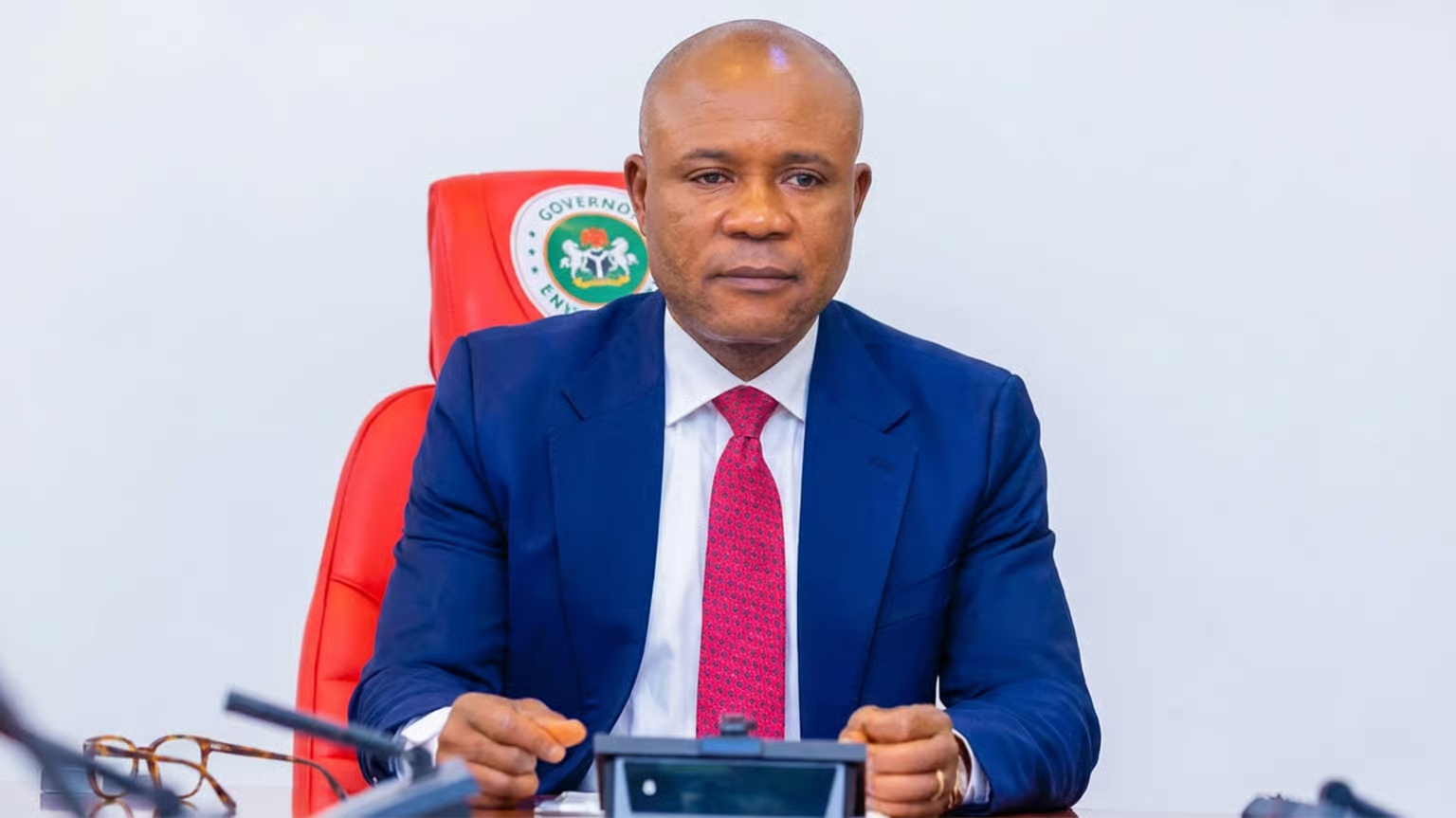
Since taking office on 29 May 2023, Governor Peter Mbah has sold Enugu a bold story of transformation. That story has now expanded into promises of coal power, industrial revival, and a future of prosperity. In September 2025, he said Enugu’s coal would be used to generate at least 1,000MW of power. In May 2026, the state announced plans to begin work on a 660MW coal-fired plant in July. Those are not small pledges. They are the kind of promises that can excite a weary public. But promises are not power. Press releases are not relief. And speeches do not pay the bills that ordinary people and businesses are carrying today.
That is the central problem in Enugu today. The government speaks in the language of grandeur, while many residents live in the language of pressure. Traders have complained about levies. The state itself, in response to public complaints, set up a committee in late 2025 to review taxes, levies, and fees. By April 2026, it had suspended daily tolls imposed on petty traders after more complaints from vulnerable residents. In March 2026, the governor also rejected claims of high taxation, insisting the state was simply widening the tax net and blocking leakages. The contradiction is obvious. A government that says it is easing burdens does not keep finding itself forced to review, suspend, or defend those same burdens.
This is where the public must become more discerning. Enugu does not need another round of glossy campaign theatre. It needs a hard account of what life has been like since 2023. Has electricity become more reliable for homes, workshops, and factories? Have businesses found breathing space, or have they only found more hands reaching into their pockets? Have miners, manufacturers, transporters, market women, and small operators felt supported, or have they been trapped in a system that keeps inventing new costs while promising future miracles? These are the questions that matter, because development is not measured by the number of grand declarations at public events. It is measured by what changes in the lives of those who wake up every day and carry the state on their backs.
The business community has not been silent. Back in 2024, reporting on the new tax regime in Enugu captured complaints from suppliers who said multiple taxation was driving business away and making traders look to other states. In late 2025 and early 2026, the state itself moved to harmonise taxes, ban illegal collections, and review revenue practices, a clear sign that the issue was too large to dismiss as politics. Even if government insists it is reforming the system, the fact that reform is repeatedly necessary tells its own story. A healthy business climate does not survive on explanations alone. It survives when entrepreneurs, miners, traders, and industrial operators can plan, invest, and grow without being ambushed.
That is why the latest coal promise should be treated with caution. Enugu’s coal story has become a convenient symbol, a shortcut to hope. But hope without execution is a political sedative. The government can announce 1,000MW today, 660MW tomorrow, and more after that. It can speak of a power revolution while the present remains expensive, tense, and uncertain. Residents cannot be asked to applaud future megawatts while current realities remain harsh. No serious electorate should be hypnotised by a promise of industrial heaven when the earth beneath them still feels like a tax trap.
The real test of leadership is simple. Has the average family been better off since 2023?
Has the small business owner found relief?
Has industry been given a reason to stay and expand?
Has the mining sector been encouraged by stability, or scared by cost?
If the answer is uncertain, then the slogan has already failed, no matter how polished it sounds. Public office should not be a contest in creative packaging. It should be a record of delivery. Enugu residents should therefore look beyond loud promises, beyond campaign noise, beyond the latest round of flattering language, and judge their leaders by the evidence of daily life. A state cannot be built on lip service. It must be built on trust, fairness, and results.
Until then, every new promise should be met with one question only: what has changed since 2023?