
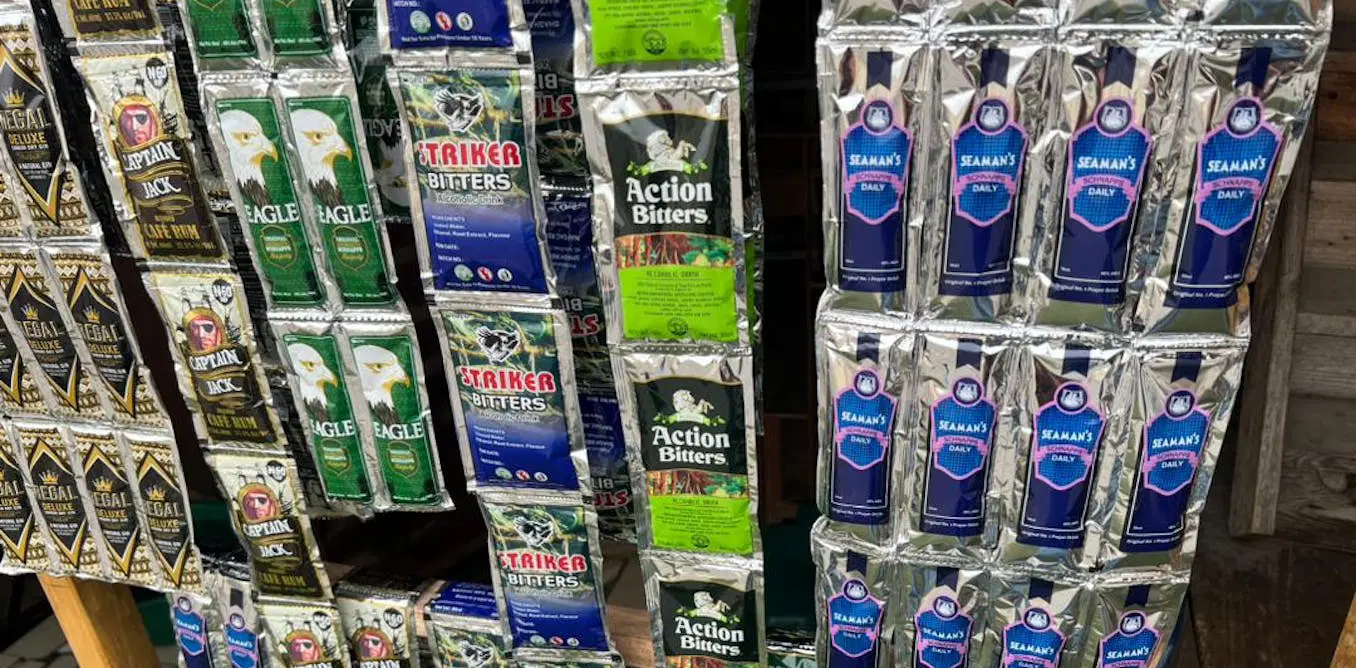
The National Agency for Food and Drug Administration and Control (NAFDAC) has maintained that its ban on small-volume alcoholic beverages remains in force, stressing that the regulatory action will not be reversed. The agency’s Zonal Director for the South-East, Dr Festus Ukadike, disclosed this in Enugu while speaking with the News Agency of Nigeria (NAN) on Friday.
Ukadike said enforcement against manufacturers and distributors of sachet alcoholic drinks had already commenced across the zone, with arrests and seizures recorded in Enugu, Imo, Abia, Ebonyi and Anambra states.
He explained that the ongoing enforcement would be followed by a wider exercise to remove the affected alcoholic products that are still available in the market. According to him, the policy does not amount to a ban on alcohol production, as manufacturers remain free to produce alcoholic beverages provided each bottle contains at least 200ml.
Ukadike said the protection of children was a major consideration behind the agency’s decision to prohibit small-volume alcoholic drinks. He expressed concern over the accessibility of sachet alcohol to young Nigerians, particularly children, saying exposure to such products could encourage unhealthy drinking habits.
“If our children are no longer exposed to sachet alcohol, they will live healthier lives, curb antisocial behaviours and promote the country’s fight against cancer and other terminal diseases,” he said.
The NAFDAC official also advised consumers to moderate their alcohol intake, arguing that giving up sachet alcoholic drinks should not be considered a major hardship. Addressing concerns that the ban could make alcoholic beverages too expensive for low-income consumers, Ukadike said public health considerations must take precedence over commercial interests.
He projected that within 12 months, Nigeria would have a more uniform regulatory environment in which alcoholic beverages packaged below 200ml would no longer be available. Ukadike said the enforcement would therefore continue until the regulatory threshold was fully observed across the country.
Meanwhile, consumers have expressed differing opinions on the ban, with some supporting NAFDAC’s position while others raised concerns about affordability.
One consumer, Mr Charles Otubo, argued that the restriction should initially have focused on motor parks, where alcohol consumption could contribute to road accidents. Another consumer, identified simply as Godwin, however, supported stronger restrictions after observing schoolchildren purchasing sachet alcoholic drinks.
He said he had seen children buy the products, conceal them inside their school bags and take them to school. Godwin suggested that alcoholic beverages should instead be restricted to designated liquor stores where access by children could be better controlled.
The differing reactions reflect the broader debate surrounding the policy, as NAFDAC balances public health concerns with questions over affordability, business interests and access to alcoholic products. For the agency, however, the position remains unchanged: alcoholic beverages below the 200ml packaging threshold are to be phased out of the Nigerian market.