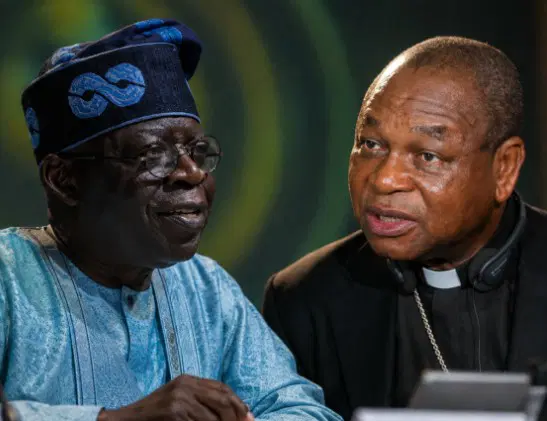
Support has continued to grow for Archbishop Emeritus of the Catholic Archdiocese of Abuja, Cardinal John Onaiyekan, and the Catholic Bishops’ Conference of Nigeria (CBCN), following criticism from the Presidency over remarks made after the bishops’ meeting with President Bola Tinubu.
The Northern Christian Association (NCA), former Vice President Atiku Abubakar and former Kaduna Central Senator Shehu Sani have all defended the bishops, insisting that their comments reflected legitimate national concerns rather than partisan politics.
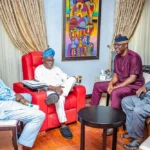
The controversy followed the July 28 meeting between President Tinubu and members of the Catholic Bishops’ Conference at the Presidential Villa.
After the meeting, Cardinal Onaiyekan said Nigerians were facing severe economic hardship, worsening insecurity and growing intolerance of dissent. He also expressed concern that the President was not receiving accurate information about conditions across the country and warned that unequal access to state resources could affect confidence in the 2027 general elections.
Presidential spokesperson Daniel Bwala rejected the remarks, arguing that the Cardinal was speaking for Catholics rather than the broader Christian community. He further described the comments as political in nature.
Responding in a statement, the Northern Christian Association accused Bwala of attempting to create unnecessary divisions among Christians.
Association Chairman, Rev. Joseph Hayab, said the Catholic bishops spoke on behalf of issues affecting all Nigerians and not solely the Catholic Church. According to him, the association comprises Christians from various denominations, including Catholics, Baptists, ECWA, Methodists, Anglicans and Pentecostals.
“We refuse to be divided by politics of division,” Hayab stated, stressing that Catholics remain an integral part of the Christian community.
He maintained that the bishops met the President to discuss national concerns affecting humanity and Nigerians generally, describing Cardinal Onaiyekan as a respected leader whose intervention was intended to help improve governance.
Hayab further criticised government officials who dismiss concerns raised by religious leaders instead of addressing the country’s pressing challenges. He warned that propaganda and attempts to silence honest criticism would only worsen Nigeria’s problems, adding that all citizens would ultimately bear the consequences if meaningful solutions were not pursued.
The NCA reaffirmed its confidence in the Catholic bishops, describing them as patriotic leaders committed to Nigeria’s progress, and urged political office holders to engage constructively with their observations.
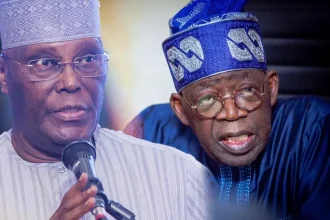
Former Vice President Atiku Abubakar also faulted the Presidency’s response, saying it chose political attacks instead of reflecting on the substance of the bishops’ message. In a statement issued by his Senior Special Assistant on Public Communication, Phrank Shaibu, Atiku alleged that President Tinubu and members of his team appeared uncomfortable with the issues raised during the meeting.
He argued that the administration had become accustomed to surrounding itself with compliant religious figures and was therefore unable to appreciate independent voices like the Catholic bishops. According to Atiku, Catholic bishops cannot be reduced to political tools because they have a moral obligation to speak truth to those in authority.
He described attempts to reinterpret the bishops’ engagement with the President as an effort to distort the facts and manufacture a narrative favourable to the government. The former vice president insisted that Cardinal Onaiyekan merely reflected the realities confronting Nigerians, including rising poverty, insecurity, unemployment and the increasing cost of living.
He called on the Presidency to apologise to the Catholic Church, Cardinal Onaiyekan and Catholic faithful across the country, warning that continued attacks on respected religious leaders would reinforce perceptions of intolerance.
Former Senator Shehu Sani also defended the Catholic bishops, saying they have maintained a long history of speaking truth to power regardless of who occupies the Presidency. Writing on his X account, Sani noted that the bishops had consistently offered honest counsel to successive administrations, dating back to the era of military rule.
He dismissed suggestions that the bishops were partisan, describing them as independent voices guided by principle rather than politics. In a symbolic reference to their approach, Sani remarked that whenever Catholic bishops visit a president, they present “bitter kola instead of olive oil,” suggesting that their mission is to offer candid advice rather than praise.
The exchange has added another layer to the ongoing public debate surrounding the bishops’ assessment of the country’s economic conditions, governance and democratic institutions following their meeting with President Tinubu.