
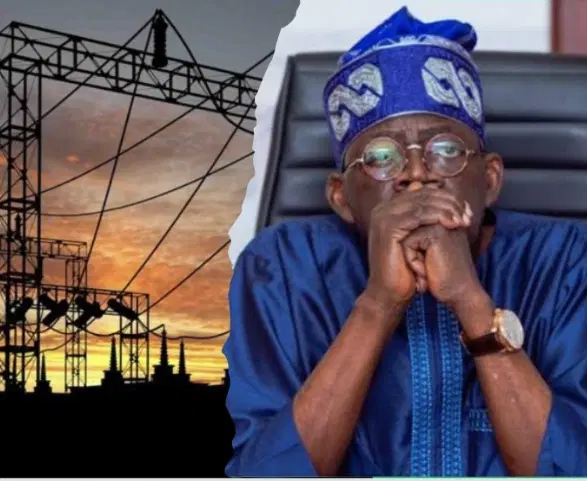
Reliable electricity supply remains a central policy goal of President Bola Tinubu’s administration as ongoing reforms target Nigeria’s long-standing power sector challenges. The President said his government is committed to improving electricity access as part of broader efforts to deliver democratic benefits to citizens.
Speaking in his Democracy Day address, Tinubu explained that the electricity sector was already burdened with deep structural problems when his administration assumed office in 2023. These challenges, he noted, included persistent generation shortfalls, unstable gas supply, and weak transmission infrastructure.
He added that distribution companies were also facing heavy financial losses, while a metering gap affecting over four million customers continued to undermine efficiency. According to him, these issues contributed to the sector’s inability to deliver reliable electricity supply across the country.
The President further stated that Nigeria’s installed generation capacity of about 13,500 megawatts was not being fully utilised. He attributed this to inefficiencies across generation, transmission, distribution, and revenue collection systems, which limited effective service delivery nationwide.
Tinubu said reliable electricity supply cannot be achieved without structural reform and coordinated investment across the entire power value chain. He noted that legacy debt obligations in the sector have also slowed progress and discouraged private sector participation.
To address these challenges, the administration introduced the Electricity Act, which decentralises the power sector and allows states to independently generate, transmit, and distribute electricity. The reform is expected to improve efficiency and expand access to reliable electricity supply across different regions.
The President also revealed that the Presidential Power Sector Task Force is working to reduce Nigeria’s metering deficit. This initiative is aimed at improving transparency in billing and strengthening accountability within the electricity market.
In addition, the Federal Government is preparing to raise a N4 trillion bond to settle verified legacy debts in the power sector. Analysts have long identified these debts as a key barrier to investment and operational stability in the industry.
Tinubu also highlighted ongoing efforts by the Rural Electrification Agency in partnership with the World Bank and the African Development Bank. These initiatives focus on expanding off-grid and mini-grid electricity solutions to underserved communities, including schools, hospitals, and markets.
According to the President, reliable electricity supply is essential for national development, economic growth, and improved living standards. He said access to stable power supports businesses, strengthens industrial productivity, and enhances public services.
The administration’s reforms are designed to improve efficiency and create a sustainable framework for long-term electricity stability. Tinubu stressed that progress in the sector requires coordinated action across federal, state, and private stakeholders.
He also recalled his 2023 campaign pledge, where he stated that Nigerians should not re-elect him in 2027 if his administration fails to deliver reliable electricity supply nationwide. The remark continues to shape public expectations around ongoing power sector reforms.
As implementation continues, the government maintains that reliable electricity supply remains a key benchmark for measuring progress in Nigeria’s broader economic and development agenda.