The Abia State Government has rejected reports that akara sellers and other petty traders are being forced to pay N50,000 in taxes, describing the claim as false.
The government also announced the designation of several historical and natural sites as State Monuments and State Natural Monuments.
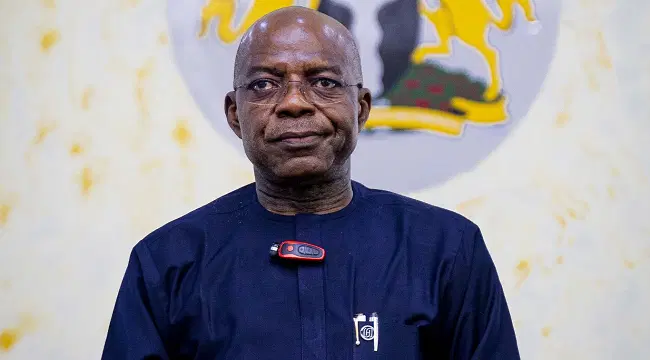
Commissioner for Information, Prince Okey Kanu, disclosed this on Monday while briefing journalists on decisions reached at the State Executive Council meeting chaired by Governor Alex Otti.
Kanu said Aba had also been designated a Creative and Innovative City because of its longstanding commercial, industrial and creative importance.
Addressing the Abia akara tax controversy, Kanu said there had been no new increase in tax rates by the Abia State Board of Internal Revenue.
He explained that most of the rates being circulated were contained in tax laws enacted in 2020 under the previous administration.
According to him, the Board of Internal Revenue cannot independently increase tax rates without enabling legislation.
“For starters, these rates are not new. Most of the rates are 2020 tax rates that were introduced by the previous government,” he said.
Kanu also explained that demand notices issued by the revenue authority were provided for under existing laws.
On the specific claim involving akara sellers, he dismissed the report.
“This is pure fallacy. Nothing can be further from the truth. Akara sellers don’t pay tax or levies. They pay daily tolls. And none can pay N50,000,” Kanu said.
The Chairman of the Abia State Board of Internal Revenue, Uche Elekwachi, supported the clarification, saying there was no revenue provision requiring akara sellers to pay N50,000.
He noted that the Abia Internally Generated Revenue Service Law establishing the applicable framework was enacted in 2020.
The state government also approved the designation of several locations as heritage sites.
The National War Museum, Ojukwu Bunker and Government College, all in Umuahia, were designated State Monuments.
Ibom Waterfall in Arochukwu and Ulochukwu Cave in Alayi, Bende Local Government Area, were designated State Natural Monuments.
Kanu said the designations were intended to preserve Abia’s cultural and natural heritage while creating opportunities for tourism and economic development.
“These sites have been elevated to heritage sites that enhance the state’s tourism potential. With this approval, they are primed to attract recognition as UNESCO Heritage Sites,” he said.
The commissioner added that Aba had been formally designated a Creative and Innovative City.
He said the retrofitting of the Ojukwu Bunker and National War Museum was about 80 per cent complete and expected to finish before the end of 2026.
The Ministry of Arts, Culture and Creative Economy also received approval to develop the Ibom Waterfall Tourism Corridor in Arochukwu.
According to Kanu, work has already started, including the grading of access roads leading to the waterfall. The project is expected to be completed before the end of the year.
The government has also begun erecting monuments at strategic locations to preserve Abia’s heritage and honour historical figures.
Kanu cited a monument dedicated to the heroines of the 1929 Aba Women’s Riot as an example, saying it would commemorate their courage, resilience, resistance and leadership.
On outstanding gratuities owed retired workers, Kanu said the government had completed payments covering retirees from 2001 to 2010.
He said preparations were underway for the next batch covering retirees from 2011 to 2025.
The next payments will begin after ongoing verification and other administrative processes are completed.
Kanu dismissed suggestions that gratuity payments only began because of opposition pressure, explaining that the financial obligations involved require payments to be made in batches.
“The payments will be in batches. The funds involved are huge for one balloon payment,” he said.
He also clarified reports suggesting that gratuity payments would end in 2031.
According to him, the 2026–2031 Medium-Term Expenditure Framework includes provisions to ensure gratuity obligations are systematically funded. He said this would help prevent new arrears from accumulating.
“That does not translate to payments being terminated in 2031. As the internal processes and verification of beneficiaries of these payments continue, due payments would still be made in batches,” Kanu said.
The commissioner expressed optimism that the outstanding gratuities could be cleared earlier than anticipated.