
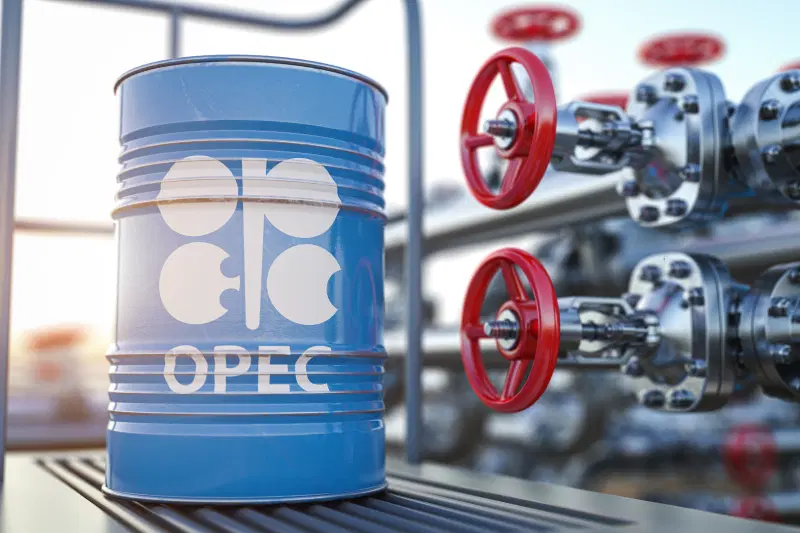
OPEC production quotas will increase again in August after seven members of the OPEC+ alliance agreed to raise collective oil output by 188,000 barrels per day. The decision comes as Gulf producers gradually restore production following months of disruption caused by conflict in the Middle East and restrictions on shipping through the Strait of Hormuz.
According to a statement issued after a virtual ministerial meeting on Sunday, Saudi Arabia, Russia, Iraq, Kuwait, Kazakhstan, Algeria and Oman approved the production adjustment, which will take effect in August 2026.
The decision follows a period of reduced production after Iran’s actions during the regional conflict disrupted maritime traffic through the Strait of Hormuz, a key route for global crude exports. OPEC data showed that between the first quarter of 2026 and May, combined production from Saudi Arabia, Iraq and Kuwait declined by about six million barrels per day as the conflict affected exports.
The recovery began after Tehran and Washington signed a memorandum of understanding on June 17, committing to remove obstacles to maritime traffic in the Strait of Hormuz while negotiations continue. Since then, shipping activity has steadily improved, contributing to a sharp decline in oil prices toward levels recorded before the conflict.
Reports cited by Bloomberg indicate that oil shipments passing through the strategic waterway may already have exceeded 10 million barrels per day. However, analysts say much of the oil currently reaching markets had already been stored in tankers and storage facilities before normal shipping resumed.
Commodity analyst Giovanni Staunovo of UBS told AFP that production remains below current OPEC production quotas, suggesting further recovery is still underway. Ole Hansen of Saxo Bank also noted that restarting suspended oil production is a gradual process, adding that stronger output gains are expected by August if shipping conditions continue to improve.
While production is expected to recover, analysts believe global oil markets could face excess supply next year. Jorge Leon of Rystad Energy told AFP that many market observers expect a surplus in 2027 as production increases continue. Although rebuilding strategic inventories may temporarily absorb additional supply, analysts caution that sustained production growth could place downward pressure on global oil prices.
The alliance is also preparing for a broader review of production baselines later this year, when members’ output capacities will be reassessed. Iraq has already requested higher production allocations to compensate for losses suffered during the Middle East conflict. However, analysts believe such discussions are more likely to form part of the 2027 capacity review rather than prompt immediate changes.
The upcoming review is expected to test cohesion within OPEC+, particularly after the departure of the United Arab Emirates from the alliance in May, as members balance production ambitions with efforts to stabilise the global oil market.