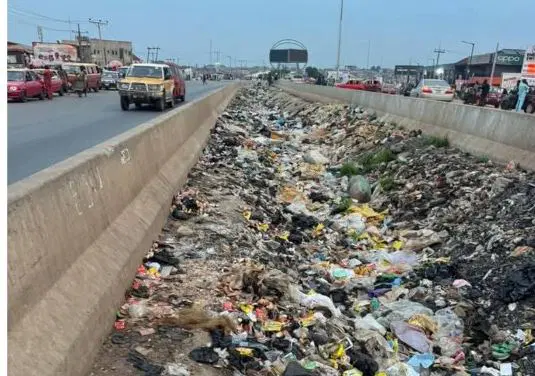
Growing refuse dumps and poor sanitation are becoming major environmental concerns across several South-West states, with communities in Ondo, Ekiti, Oyo and Ogun grappling with overflowing waste, blocked drainage systems, offensive odours and continued cases of open defecation despite ongoing government interventions.
Residents, environmental experts and public officials say inadequate waste infrastructure, rapid urbanisation, poor compliance with sanitation regulations and limited public participation continue to undermine efforts to maintain cleaner communities.
Across the region, refuse heaps have become common sights along highways, residential streets and commercial centres. The situation has triggered concerns over disease outbreaks, flooding during heavy rains and the environmental impact of indiscriminate waste disposal. While state governments have introduced various sanitation initiatives, enforcement programmes and public awareness campaigns, challenges persist in both urban and rural communities.
In Ondo State, major roads in Akure, including Arakale, Ijoka, Oke Aro, Aule, Orita Obele and Odopetu Market, remain heavily affected by accumulated waste.
Residents attributed the situation to irregular refuse evacuation, weak enforcement of environmental regulations, inadequate collection trucks and continued reliance on informal waste disposal methods. Many households reportedly dump refuse along roadsides, burn waste or bury it within residential compounds instead of using approved waste collection services.
Commissioner for Environment Dr. Tob Loko said the state maintains a zero-tolerance policy on environmental violations and urged residents to support Governor Lucky Aiyedatiwa’s OUR EASE Agenda by complying with proper waste disposal practices.
Chairman of the Ondo State Waste Management Authority, Mrs. Olayinka Alabi, also called on traders to take responsibility for proper refuse disposal by subscribing to approved waste management services. Environmental expert Bukola Ojo recommended increased funding for waste management, stronger supervision of private operators, improved recycling initiatives and expanded disposal infrastructure.
In Ekiti State, residents living near the Ilokun dumpsite expressed concerns over persistent foul odours from one of the state’s three major waste disposal sites. Residents Musa Sule and Amina Abubakar described the smell as unbearable and raised concerns about its impact on public health, particularly among children.
Former Director-General of the Ekiti State Waste Management Agency, Olasunkanmi Onipede, however, maintained that government has continued investing in waste management infrastructure and environmental safeguards.
According to him, Ekiti operates three major dumpsites at Ilokun, Shasha and Iyin-Ekiti, each occupying more than 23 hectares, with authorities maintaining regular management and monitoring of the facilities. He added that there are currently no plans to relocate the dumpsites but stressed the importance of collaboration between government agencies and residents.
In Oyo State, refuse dumps remain visible across communities including Bodija, Ojoo, Beere, Challenge, Dugbe, Apata and Orita-Challenge in Ibadan. Officials attributed the challenge to population growth, poor waste disposal habits, financial constraints affecting waste collection subscriptions and inadequate sanitation facilities.
Commissioner for Environment and Natural Resources, Ademola Aderinto, said government has strengthened refuse evacuation through licensed private waste collectors while intensifying enforcement through the Environmental Tribunal.
Chairman of the Oyo State Waste Management Authority, Abdul-lateef Idowu Oyelere, appealed to residents to register with accredited waste collectors, warning that illegal dumping continues to frustrate government efforts. Environmental health specialists warned that poor sanitation contributes to diseases including cholera, typhoid, diarrhoea and malaria while increasing flood risks through blocked drainage channels.
In Ogun State, investigations revealed continued cases of open defecation and illegal refuse disposal across several communities despite expanded government programmes.
Communities along the Lagos-Ibadan Expressway, including Kara, Isheri, Warewa and Magboro, remain affected by inadequate public sanitation facilities. Older neighbourhoods in Abeokuta such as Sabo, Totoro, Sokori, Sapon and Oke-Itoku also face sanitation challenges linked to ageing infrastructure and limited toilet facilities.
Through the Rural Water Supply and Sanitation Agency in collaboration with UNICEF, the state has expanded its “One House, One Toilet” campaign across multiple communities.
Commissioner for Environment Ola Oresanya disclosed that government is constructing 200 public toilets across the state’s 20 local government areas, with about 89 already completed.
He also said petrol stations, eateries and other public facilities have been directed to provide functional toilets for public use. The Ogun State Waste Management Authority has also intensified enforcement, arresting 128 residents and sanctioning 20 industries for illegal refuse disposal, while several offenders have been prosecuted under existing environmental laws.
Environmental experts say addressing the region’s sanitation challenges will require stronger enforcement, expanded waste collection infrastructure, increased public education, wider adoption of recycling and greater collaboration between governments, private operators and residents. They also stressed that improved sanitation remains essential to preventing disease outbreaks, reducing flooding and promoting healthier communities across the South-West.
Although the four states have introduced policies aimed at improving environmental sanitation, visible refuse dumps and poor waste disposal practices continue to highlight the need for sustained investment, stricter compliance and greater public participation in maintaining cleaner and healthier environments.