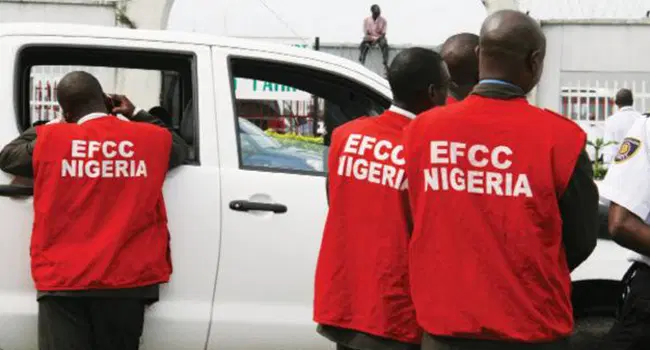
The Federal Government’s efforts to combat illicit financial activities have gained renewed attention following reports that the Economic and Financial Crimes Commission (EFCC) had already launched a terror financing investigation into a Lagos-based Bureau De Change (BDC) operator before sanctions were imposed by the United States government.
According to sources within the anti-graft agency, the EFCC had completed significant portions of its inquiry into Mukhtar Adamu Muhammad and three companies linked to him. The commission was reportedly preparing legal charges before US authorities announced sanctions against the individuals and entities involved. The development highlights growing international and domestic cooperation aimed at disrupting financial networks suspected of supporting extremist activities.
The case gained international prominence after the United States government designated Muhammad and three Nigerian companies as alleged financial facilitators connected to activities linked to the Islamic State of Iraq and Syria (ISIS). The sanctions formed part of a broader enforcement action targeting three individuals and six entities accused of helping facilitate financial transactions associated with ISIS operations across several countries.
US authorities alleged that the sanctioned individuals and organizations played roles in supporting financial structures connected to the extremist group, leading to restrictions and penalties under American counterterrorism measures.
While details of the allegations remain subject to legal and regulatory processes, the sanctions have intensified scrutiny of financial flows and compliance standards within the region.
Sources familiar with the matter indicated that the EFCC’s terror financing investigation was already at an advanced stage before the US action became public.
According to the sources, investigators had gathered substantial information regarding the activities of the suspects and associated companies. Preparations were reportedly underway for possible prosecution as part of broader efforts to enforce Nigeria’s anti-money laundering and counterterrorism financing laws.
The timing suggests that Nigerian authorities had independently identified concerns requiring investigation before the international sanctions announcement. The EFCC has continued to strengthen its focus on financial crimes that could threaten national security, including money laundering, terrorism financing, and the abuse of financial institutions for illicit purposes.
The latest terror financing investigation underscores increasing pressure on financial institutions, Bureau De Change operators, and corporate entities to strengthen compliance procedures and maintain transparency in financial transactions.
Industry analysts note that global financial systems are becoming more interconnected, making regulatory cooperation between countries increasingly important in tracking suspicious transactions and preventing the movement of illicit funds.
The case also highlights the importance of robust due diligence, customer verification systems, and regulatory oversight within Nigeria’s financial ecosystem.
As authorities continue their investigations, stakeholders across the financial sector are expected to closely monitor developments, particularly regarding potential prosecutions and the broader impact on anti-terrorism financing enforcement efforts.
The outcome of the case could further shape regulatory compliance standards and reinforce ongoing efforts to protect Nigeria’s financial system from abuse by criminal and extremist networks.