– Dr. Robert Ngwu
On one hand, Enugu State is celebrating unprecedented revenue growth, reporting ₦406.77 billion in Internally Generated Revenue (IGR) in 2025 and projecting an even more ambitious ₦870 billion target for 2026.
On the other, some retired civil servants in the same state are reportedly surviving on ₦447 per month.
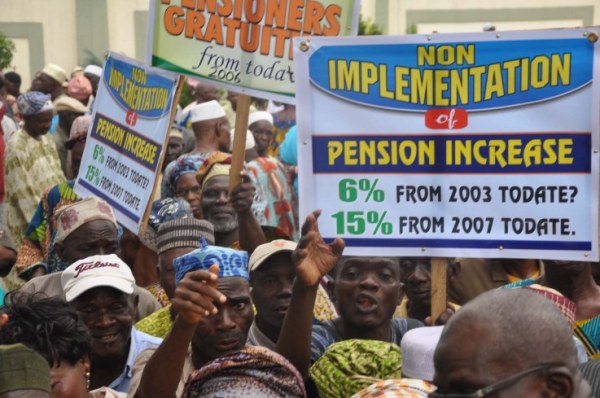
That startling figure was disclosed by the Nigeria Union of Pensioners (NUP), Enugu State Council, as it renewed its appeal to Governor Peter Mbah to implement the ₦32,000 minimum pension already adopted by the Federal Government.
For many observers, the question is no longer whether Enugu can afford to improve pensioners’ welfare.
The question is why it has not.
What Can ₦447 Buy in Today’s Nigeria?
In today’s economy, ₦447 is scarcely enough to purchase a loaf of bread. It cannot buy a meal. It cannot purchase basic medication. It cannot pay transportation to a hospital.
Ironically, many of these same pensioners are still required to appear periodically for biometric verification exercises to prove they are alive before continuing to receive their pensions. For some retirees, the transport fare to the verification centre may well exceed the pension they receive for the entire month.
That reality raises uncomfortable questions about both the adequacy and humanity of the existing pension structure.
Pensioners Acknowledge Improvements, but Say More Must Be Done
To be fair, the Nigeria Union of Pensioners did not present an entirely negative assessment of the current administration. The union publicly acknowledged that Governor Peter Mbah pension payment is better than the previous administration of Gov. Ugwuanyi. For many retirees, receiving pensions on schedule (even if it is N447) represented a significant improvement.
But the union insists that regular payment alone cannot solve the crisis when the pension itself is grossly inadequate. Its immediate demand is straightforward:
Implement the ₦32,000 minimum pension promised under the new national minimum wage arrangement, ensuring that no pensioner receives less than that amount.
The Bigger Problem Is Gratuity
Beyond monthly pensions lies an even deeper crisis. Thousands of retired workers across Enugu State remain unpaid their gratuities. According to the pensioners’ union, retired local government workers and primary school teachers are owed gratuities dating back to 2006, while many retired state civil servants have not received gratuities since approximately 2010.
For many families, those gratuities represented retirement savings intended to build modest homes, pay hospital bills, invest in small businesses or support children and grandchildren. Instead, many retirees have died waiting.
How Did Enugu Get Here?
The gratuity crisis did not emerge overnight. Its origins can be traced to the closing period of the Chimaroke Nnamani administration in 2007, when Enugu’s pension and gratuity system entered a prolonged period of financial distress.
That period coincided with the Economic and Financial Crimes Commission (EFCC)’s investigation and prosecution of former Governor Chimaroke Nnamani and several others over allegations involving approximately ₦5.3 billion in Enugu State funds. That was $41.7million then.
The criminal proceedings lasted for years before aspects of the case were eventually resolved through a plea bargain in 2015, resulting in the forfeiture of several companies and other assets to the Federal Government.
Whether viewed politically or legally, one fact remains difficult to dispute: the gratuity backlog that emerged during that era became one of the longest-running liabilities inherited by successive governments.
Governor Sullivan Chime inherited that burden and attempted to reduce it. Despite operating with significantly lower revenues than the state receives today, his administration reportedly managed to pay gratuities up to about 2010 before fiscal constraints slowed further progress. Subsequent administrations inherited the same unresolved obligation.
A Different Financial Reality
Today, Enugu is no longer the state it was fifteen or twenty years ago. Revenue has expanded dramatically. Internally generated revenue has reached historic levels. Federal allocations have also grown substantially.
The state has embarked on major infrastructure projects and ambitious development programmes. These projects have earned praise in many quarters. They also create a legitimate public expectation that elderly citizens who spent decades serving the state should no longer remain at the bottom of government priorities.
Why Hasn’t Enugu Implemented the ₦32,000 Minimum Pension?
This remains one of the most pressing questions. The Federal Government has already implemented the pension review associated with the new minimum wage.
The Nigeria Union of Pensioners says the government promised to implement the ₦32,000 minimum pension. Yet many pensioners continue to wait. Each passing month prolongs the hardship of thousands of elderly citizens facing rising food prices, inflation and escalating healthcare costs.
More Than Numbers
Behind every unpaid gratuity is a retired teacher, a nurse, an engineer, a clerk, agricultural extension officer, a messenger, and a public servant who devoted three or four decades to building the institutions that keep government functioning. For them, gratuity is not a political gift. It is earned compensation. Likewise, a pension is not charity. It is a legal entitlement.
The Test of Leadership
Governments are often judged by the roads they construct, the airports they commission and the investment figures they announce. History, however, frequently judges them by something far simpler:
How they treated the people who could no longer fight for themselves.
The restoration of regular pension payments deserves recognition.
But paying ₦447 to a retiree in a state generating hundreds of billions of naira annually presents a contradiction that many citizens find difficult to defend.
The historical circumstances that created Enugu’s gratuity crisis may explain how the problem began. They no longer explain why it continues, especially since some of the key officials of Chimaroke government is now leading the current administration.
As the state celebrates record revenues and ambitious development plans, thousands of pensioners are asking for something far less ambitious: The implementation of the ₦32,000 minimum pension and the payment of gratuities they earned years, sometimes decades, ago. For many of them, time is no longer measured in fiscal years or budget cycles. It is measured in the hope that they will still be alive when the state finally fulfils its promise.