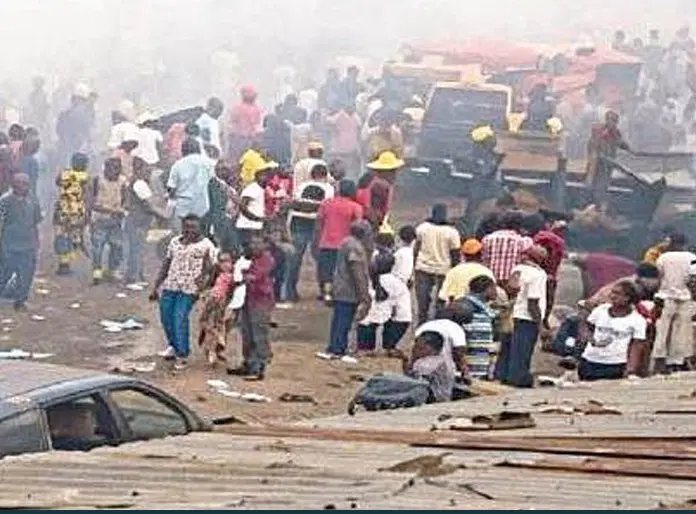
Jilli market airstrike has left deep human loss in affected communities, with one resident recounting the death of six brothers during the incident. The airstrike occurred in Jilli, a remote area along the Borno–Yobe border known for complex security activity. Survivors described scenes of confusion and destruction following the strike on a busy market day. The development has intensified attention on civilian impact within ongoing counter-insurgency operations.
Jilli market airstrike occurred within a region long affected by insurgency linked to groups such as Boko Haram and its affiliates. The area has been identified by security agencies as a corridor used for logistics and movement by armed groups.
Military operations in such regions often involve aerial surveillance and targeted strikes aimed at disrupting insurgent activity. However, these operations take place in environments where civilians and non-state actors may share the same spaces.
According to multiple reports, Jilli market had been known as a location where both traders and suspected insurgents operate. This overlap has made it a sensitive target within ongoing military campaigns. The incident forms part of a broader pattern of air operations in Nigeria’s northeast, where authorities have sought to contain insurgent threats over several years.
Jilli market airstrike took place on April 11, 2026, when Nigerian Air Force operations targeted what officials described as a terrorist enclave. The strike hit a market area where large numbers of people had gathered. Reports indicate that casualties ranged widely, with estimates suggesting that over 100 people were killed, while some local accounts placed the figure closer to 200.
A resident interviewed after the incident stated that he lost six brothers in the airstrike, highlighting the scale of impact on individual families. Survivors and witnesses described the market as crowded at the time, with traders, buyers, and transporters present.
Military authorities maintained that the operation was based on intelligence identifying the location as a logistics hub for insurgent groups. The government stated that the strike targeted “confirmed terrorist targets” within a high-risk zone.
However, local accounts and humanitarian observers indicated that many of those affected were civilians engaged in trading activities. Some survivors questioned the decision to strike a location known to attract large gatherings. Following the incident, the Federal Government ordered an investigation into the planning and execution of the operation to determine the circumstances surrounding the casualties.
Jilli market airstrike highlights the human cost associated with military operations in conflict zones. For affected families, the loss of multiple relatives underscores the depth of personal and community trauma.
For security agencies, the incident raises critical questions around intelligence accuracy, targeting decisions, and civilian protection during operations. For policymakers, the development reinforces the need for stronger safeguards and clearer operational protocols in high-risk environments.
For communities in conflict-affected areas, the event reflects ongoing vulnerability, where economic survival activities intersect with security operations. The incident also contributes to wider national and international discussions on balancing counter-insurgency efforts with protection of civilian lives.