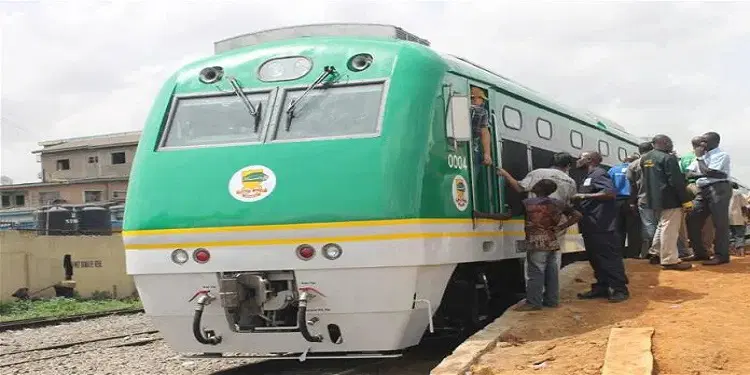
The Warri-Itakpe train suspension has disrupted passenger movement across Nigeria’s central rail corridor after the Nigerian Railway Corporation announced the indefinite suspension of operations on the route due to operational and technical concerns. The development comes ahead of the Eid-el-Kabir celebrations, a period that typically records increased passenger traffic on rail networks nationwide.
The Nigerian Railway Corporation disclosed the suspension through a statement issued by its Chief Public Relations Officer, Callistus Unyimadu. According to the corporation, the decision followed unresolved technical and operational challenges affecting the Warri-Itakpe Train Service corridor.
The NRC did not immediately provide a specific date for resumption of services, stating instead that operations would remain suspended until ongoing technical assessments and corrective procedures are completed. The Warri-Itakpe train suspension represents another disruption on one of Nigeria’s most strategic standard-gauge rail corridors connecting Delta State to Kogi State and other adjoining regions.
The announcement comes at a critical period ahead of the Sallah celebrations when inter-state travel demand traditionally increases. The Federal Government had earlier approved a 50 percent reduction in train fares across NRC-operated routes to support holiday travel during Eid-el-Kabir celebrations.
Passengers who rely on the corridor for business and personal travel may now face transportation challenges as alternative road transport options continue to experience high demand and rising operational costs. The Warri-Itakpe route has become increasingly important for passengers seeking safer and more affordable transportation alternatives, particularly amid security concerns affecting parts of Nigeria’s road network.
The latest disruption follows previous technical incidents recorded along the rail corridor. Earlier operational interruptions involved multiple engine failures that affected scheduled departures from both Warri and Itakpe stations. During an earlier suspension, the NRC stated that emergency recovery procedures were activated after engine failures disrupted train operations. Passengers were reportedly evacuated through coordinated road transportation arrangements with security support.
The train suspension also revives concerns about maintenance sustainability and operational reliability within Nigeria’s expanding rail transport system. Industry observers note that technical reliability remains critical as the government continues positioning rail transportation as a major component of national mobility and infrastructure development.
The Warri-Itakpe rail line remains one of Nigeria’s most significant standard-gauge railway projects. The corridor connects Warri in Delta State to Itakpe in Kogi State and was originally designed to support industrial transportation linked to the Ajaokuta Steel project before later expanding into passenger operations.
Officially inaugurated in 2020, the rail line has become an important transport link for passengers and commercial activities across multiple states. The corridor also supports broader federal infrastructure plans aimed at improving connectivity between southern and northern economic zones. Transportation analysts say disruptions on the route could temporarily affect mobility for traders, business operators, and commuters who depend on rail services for cost-effective movement.
The indefinite suspension may place additional pressure on Nigeria’s road transport system, especially during the holiday travel period. Transport operators often experience increased passenger demand whenever rail services are interrupted.
The Warri-Itakpe train suspension also highlights broader infrastructure management challenges facing public transportation systems nationwide. Experts argue that consistent maintenance investment, technical upgrades, and operational audits are necessary to improve long-term reliability across the rail sector. Passengers and logistics operators are now awaiting further updates from the NRC regarding restoration timelines and technical repairs.