
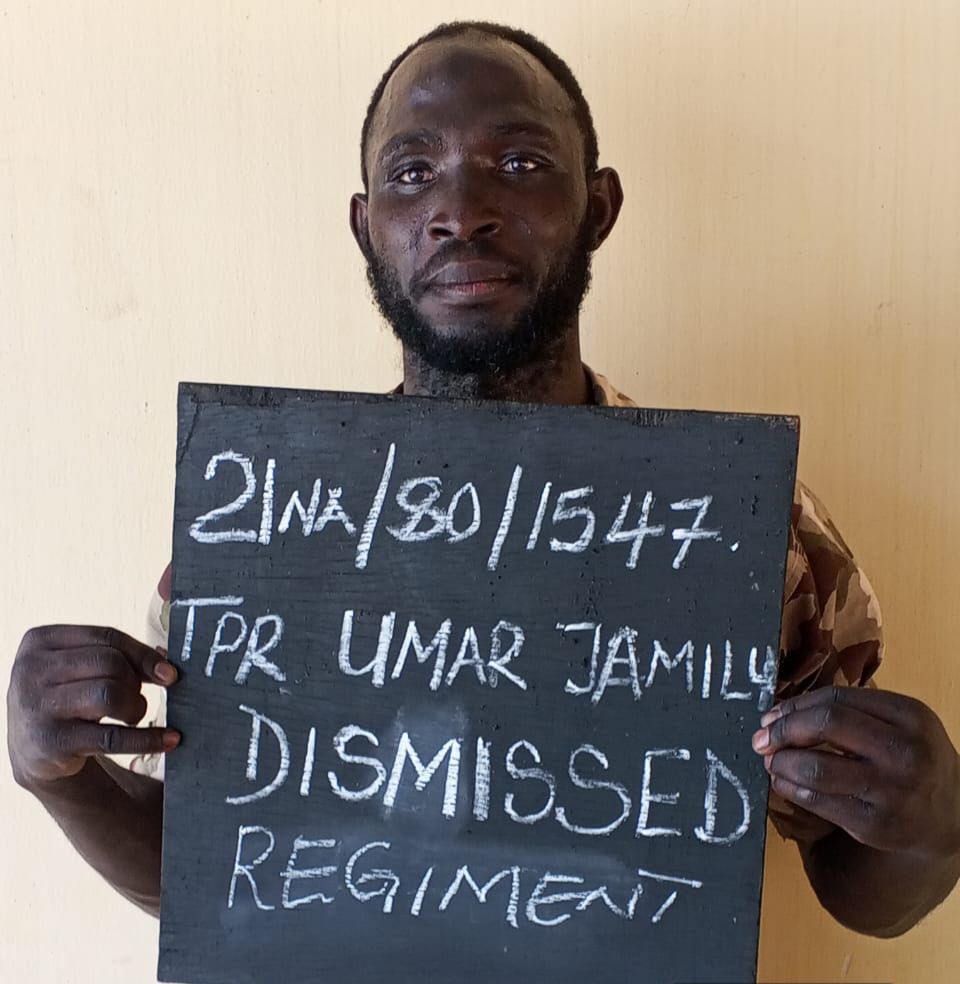
The poor feeding claim involving a Nigerian soldier has led to disciplinary action by the military. The Nigerian Army sanctioned personnel serving under Operation Hadin Kai over a viral social media post. Authorities said the content misrepresented feeding conditions in the North-East theatre. The poor feeding claim has raised fresh attention on troop welfare and information control.
The poor feeding claim emerged from a viral image shared online. The post suggested that troops were inadequately fed during operations. It quickly attracted public concern and scrutiny. Operation Hadin Kai is Nigeria’s major military effort in the North-East. Troops operate under challenging security and environmental conditions. Welfare and logistics remain critical to operational effectiveness.
Military institutions maintain strict communication rules for personnel. Public disclosures by serving officers are regulated to protect operational integrity. The situation reflects ongoing tensions between transparency and internal discipline.
The Nigerian Army confirmed that the poor feeding claim prompted an internal investigation. Lt. Col. Sanni Uba, Media Information Officer of the Joint Task Force North-East, announced the findings. He stated that the circulated image “did not reflect the full ration issued.”
According to the statement, the content was misleading and incomplete. The Army said feeding arrangements follow approved standards across formations. It added that provisions are monitored through structured internal systems.
Uba explained that food management involves committees across ranks. These committees oversee planning, preparation and distribution of meals. This structure aims to ensure transparency and accountability within available resources. Following the investigation, the soldier involved was sanctioned. The Army said the action complied with the Armed Forces Act. It described the misconduct as deliberate misrepresentation of operational realities.
The military also reaffirmed its commitment to troop welfare. It noted that feeding systems are enhanced during periods such as Sallah and Easter.
The poor feeding claim highlights the importance of information accuracy in security operations. Misinformation can affect troop morale and public trust. It may also influence perceptions of institutional credibility. For Nigeria’s broader environment, military stability supports economic activity. Security operations in the North-East directly affect trade, agriculture and investment. Maintaining morale among troops remains essential for operational success.
The incident also reflects growing influence of social media on institutional accountability. Public narratives can shape policy discussions and oversight demands. At the same time, organisations continue to enforce internal discipline.